AI-powered video production helping small businesses create cinematic commercial advertising campaigns
AI-powered video production helping small businesses create cinematic commercial advertising campaigns
Table of Contents
- Introduction: The Democratization of Commercial Scale
- Why Traditional Advertising Is No Longer Enough
- How AI Is Transforming Small Business Advertising
- Why AI-Powered Ads Deliver Better ROI
- Cinematic AI Advertising: Competing with Big Brands
- AI Video Production Workflow for Small Businesses
- Best AI Tools for Small Businesses
- Common Mistakes Businesses Make
- Why Human Creativity Still Matters
- Frequently Asked Questions
Introduction: The Democratization of Commercial Scale
The advertising industry is undergoing its most profound structural shift since the transition from print to digital media. For decades, a stark, unyielding divide existed in the marketplace: large corporations with multi-million-dollar budgets commanded the visual high ground, deploying cinema-grade brand films, luxury commercials, and high-production-value video campaigns across global networks. Ambitious small businesses and startups, conversely, were relegated to flat graphics, static stock imagery, or low-budget, local-style video campaigns. The constraint was never a lack of vision; it was the sheer physical and financial friction of commercial production.
Traditional commercial video production is notoriously complex and prohibitively expensive. A single professional 30-second commercial requires location scouting, permit acquisition, casting calls, insurance, director hires, high-end camera rigs, lighting crews, editors, colorists, sound designers, and motion graphic artists. By the time a physical camera rolls, a business has often sunk tens of thousands of dollars into project overhead—an investment that must yield a positive return on a single creative direction. For a small business, this high cost represents an existential risk. If the creative fails to resonate with the target market, the entire budget is gone with no room left for strategic pivots.
This is where Artificial Intelligence enters the advertising landscape, not as a minor efficiency tool, but as a massive equalizer. By decoupling visual output from physical logistics, generative AI technology allows ambitious businesses to synthesize high-fidelity, cinema-grade commercials in days rather than months, and for a fraction of the cost of traditional shoots. The digital wall that kept small brands from projecting a premium, national-scale brand presence has been dismantled. AI-powered ads have transformed the competitive landscape, making premium storytelling an accessible resource for any company willing to embrace the technology.
In this comprehensive guide, we will analyze the mechanics of this transformation. We will explore why traditional marketing loops are failing, how generative AI is rebuilding production budgets, and how small brands can deploy cinematic AI ads to directly challenge market leaders. You will learn the strategic blueprints, production workflows, tools, and pitfalls of building a high-velocity AI advertising campaign that drives real engagement, lower CPAs, and sustained Return on Ad Spend (ROAS). The era of physical limitation is over; the era of computational scale has arrived.
At Neural Noir, we view this shift not as the replacement of human artistry, but as its liberation. When a small business uses AI to build campaigns, they are not settling for lesser quality—they are accessing a virtual studio of infinite locations, actors, camera moves, and visual assets, all under the precise creative direction of human storytellers. This guide is your roadmap to mastering this new strategic advantage, detailing how to utilize AI video production to command attention, build trust, and scale your brand globally.
Why Traditional Advertising Is No Longer Enough
To understand why AI-powered ads are essential for modern survival, one must examine the critical points of traditional digital marketing. For years, small businesses relied on bidding hacks, audience hyper-targeting, and media buying tricks to run profitable campaigns on platforms like Meta, Google, and TikTok. But privacy regulations like Apple iOS 14.5 and the automated bidding engines of Meta Advantage+ have leveled the targeting playing field. Today, the advertising algorithms of major networks operate as self-optimizing black boxes. They handle bidding, placement, and targeting automatically. The only variable that a business can directly control to influence performance is the creative itself.
This shift has triggered a sharp rise in customer acquisition costs (CPA). Because targeting is automated, the algorithm distributes ads based on immediate engagement signals: watch time, hook retention, scroll-stopping visual appeal, and click-through rates. Cheap, low-quality stock videos or flat graphics are quickly ignored by users, prompting the platform algorithms to charge a premium for distribution or suppress the ad entirely. Audiences have developed a sophisticated filter for promotional content. They ignore generic ads, meaning brands must achieve cinematic, highly polished aesthetics just to earn a few seconds of consumer attention.
Compounding this issue is the phenomenon of ad creative fatigue. In the modern social-first ecosystem, an advertisement's lifespan is remarkably short. A high-performing ad variant on Instagram or TikTok can fatigue and see declining returns in as little as 48 to 72 hours as the target audience sees the same visual hook repeatedly. To maintain stable acquisition costs, a brand cannot rely on one or two commercials per quarter. They must produce a continuous stream of fresh visual variants, changing hooks, backgrounds, product presentations, and color schemes to satisfy hungry algorithms and keep audiences engaged.
For small businesses, meeting this content velocity demand through traditional production methods is physically and financially impossible. A traditional shoot produces a limited set of assets. If you need to test ten different visual environments, you must scout and travel to ten locations, schedule multiple shoot days, and re-hire casting talent. The math simply does not work for growing brands. Traditional advertising workflows are too slow, too rigid, and too capital-intensive to keep pace with the real-time feedback loops of modern digital ad platforms.
Furthermore, the rising cost of physical production elements—from studio rentals to crew day rates—means that traditional advertising agencies must charge premium prices just to cover their own overhead. This leaves small businesses locked out of high-end advertising, forced to watch enterprise competitors dominate premium search and social placements. To break this cycle, businesses must pivot to a production model that is fast, agile, and scalable: a model built on cinematic AI video production.
How AI Is Transforming Small Business Advertising
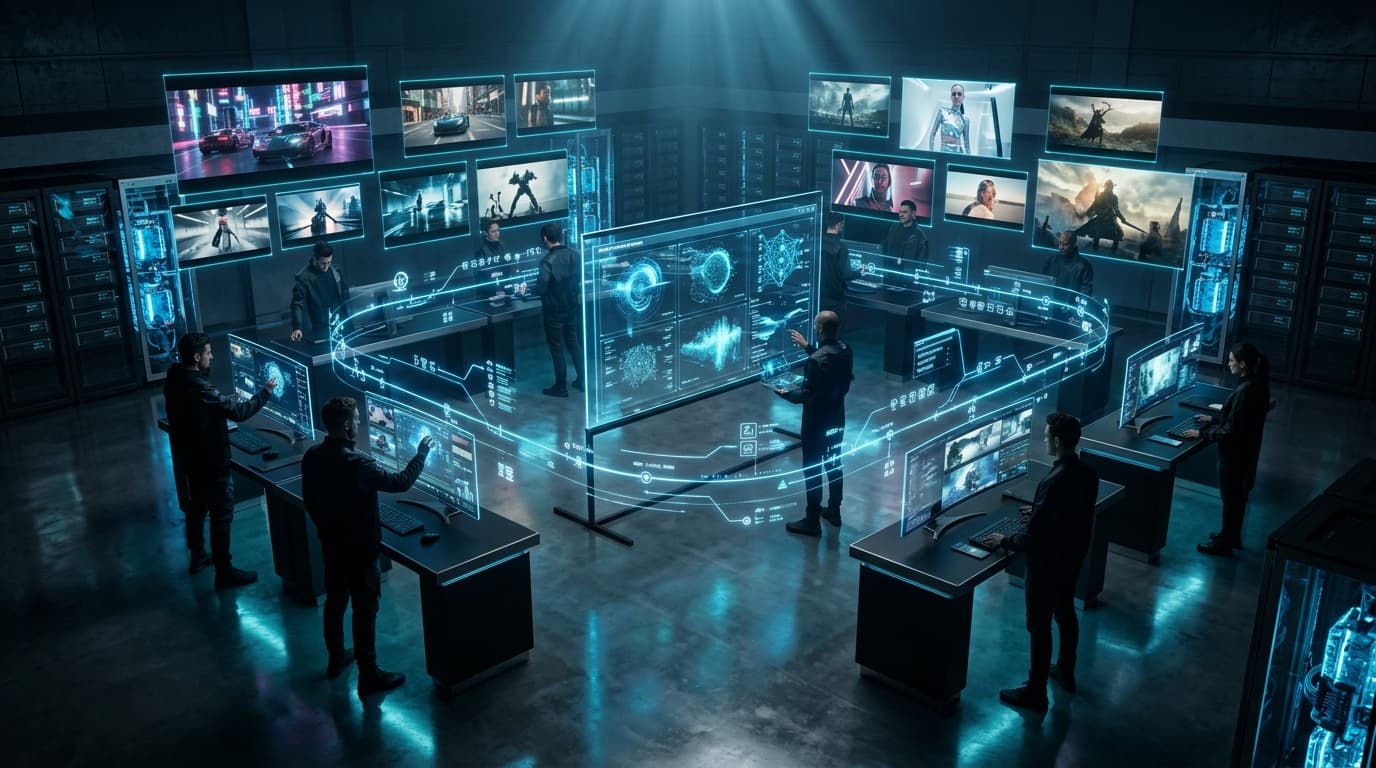
Generative AI has fundamentally changed the advertising production pipeline by replacing physical cameras, sets, and actors with advanced neural rendering models. Instead of organizing a physical shoot, creative teams now use text prompts, image inputs, and motion vectors to generate hyper-realistic visual sequences. This allows small business owners to bypass physical production hurdles, translating raw creative concepts into broadcast-grade commercial spots. The technology spans across every critical stage of content creation, offering a unified workflow for visual asset generation.
AI image generation models like Midjourney and Flux can synthesize ultra-photorealistic product placements, stylized backgrounds, and high-fashion model photography in seconds. By inputting a clean photo of a physical product, these systems place the item in any luxury setting imaginable—from a marble tabletop in a Parisian penthouse to a sleek display in a neon-lit cyberpunk metropolis. This eliminates the need for expensive product photographers, specialized lighting setups, and studio bookings, allowing small brands to present their products with the same premium aesthetics as luxury fashion houses.
AI video generation represents the next phase of this shift. Tools like Runway, Kling, and Google Veo project pixels dynamically over time, simulating real-world physics, camera pans, lighting shifts, and fluid motion. Instead of recording a physical vehicle on a wet highway at sunset, a producer can prompt a model to render a metallic sports car gliding through a rain-slicked city street, capturing cinematic lens flares and realistic reflections. This capability gives small businesses access to blockbuster-style camera moves, expensive action setups, and premium locations that were once impossible to shoot due to budget constraints.
Beyond visuals, AI voice synthesis and copywriting models have modernized post-production. Voice generation systems like ElevenLabs produce highly natural, expressive narrations that match the depth, tone, and pacing of professional voice actors. Creative teams can write a script, select a voice profile, adjust the emotional delivery, and render a high-quality voice track instantly in multiple languages. This removes the friction of hiring voice talent, booking recording studios, and running translation loops, making global localization easy for growing brands.
AI-assisted editing tools complete the pipeline by automating tedious tasks like rotoscoping, frame interpolation, upscale rendering, and temporal stabilization. These tools clean up raw AI outputs, ensuring that individual clips flow naturally, maintain consistent lighting, and exhibit minimal visual noise. The final result is a polished, high-definition commercial that is indistinguishable from traditional studio productions.
By integrating these generative layers into a structured production pipeline, small businesses can run creative iterations at unprecedented speed. If an ad campaign shows declining performance, a copywriter can rewrite the hook, generate five new visual openings, render a fresh voiceover, and compile a brand-new commercial in a single afternoon. This level of agility allows brands to respond immediately to market trends, seasonal changes, and real-time campaign performance data.
Why AI-Powered Ads Deliver Better ROI
The primary argument for AI-powered advertising is its impact on campaign profitability. In paid media, Return on Investment (ROI) is directly tied to two key variables: the upfront cost of producing the creative asset, and the ongoing efficiency of the ad campaign (determined by Click-Through Rates, Cost Per Click, and Conversion Rates). Traditional production methods front-load campaigns with massive capital expenditures, requiring weeks of high-performance returns just to cover the cost of creating the video. AI-powered production, by contrast, lowers the cost of entry, allowing campaigns to run profitably from day one.
By eliminating physical shoots, AI-powered ads reduce creative production overhead by up to 80% to 90%. A small business can allocate these saved funds directly to their media buying budget, purchasing more impressions and targeting more potential customers. This shift in budget allocation is crucial for early-stage brands that need to maximize the reach of every marketing dollar. Instead of spending $10,000 on a single video and $2,000 on ads, a brand can spend $1,500 on a suite of cinematic AI ads and $10,500 on distribution, driving more traffic and sales.
Furthermore, lowering production costs allows for extensive multivariant creative testing. In modern digital marketing, running a single ad variant is a high-risk strategy. By producing 10 to 20 unique AI ad variants—each featuring a different visual hook, background environment, color scheme, and call-to-action—a business can run parallel tests to identify the most effective creative. The ad platform's algorithm automatically funnels budget to the highest-performing variant, optimizing the campaign's average Click-Through Rate (CTR) and lowering the Cost Per Acquisition (CPA).
AI ads also drive higher engagement because they are designed to capture attention quickly. Generative tools allow editors to create striking visual hooks in the first three seconds of a video—such as surreal product reveals, dynamic lighting transitions, or unique visual effects—that stop users from scrolling past. Longer watch times and higher completion rates signal to platform algorithms that the ad is relevant, which lowers the cost per thousand impressions (CPM) and boosts overall ROAS.
Finally, this workflow enables rapid, data-driven optimization. When performance metrics indicate that an ad's click-through rate is dropping, a creative team can quickly generate a new hook, update the product background, and swap the voiceover in a few hours. This continuous optimization loop prevents campaign performance decay and ensures that your advertising budget consistently drives sales, rather than being wasted on tired creative.
Cinematic AI Advertising: Competing with Big Brands
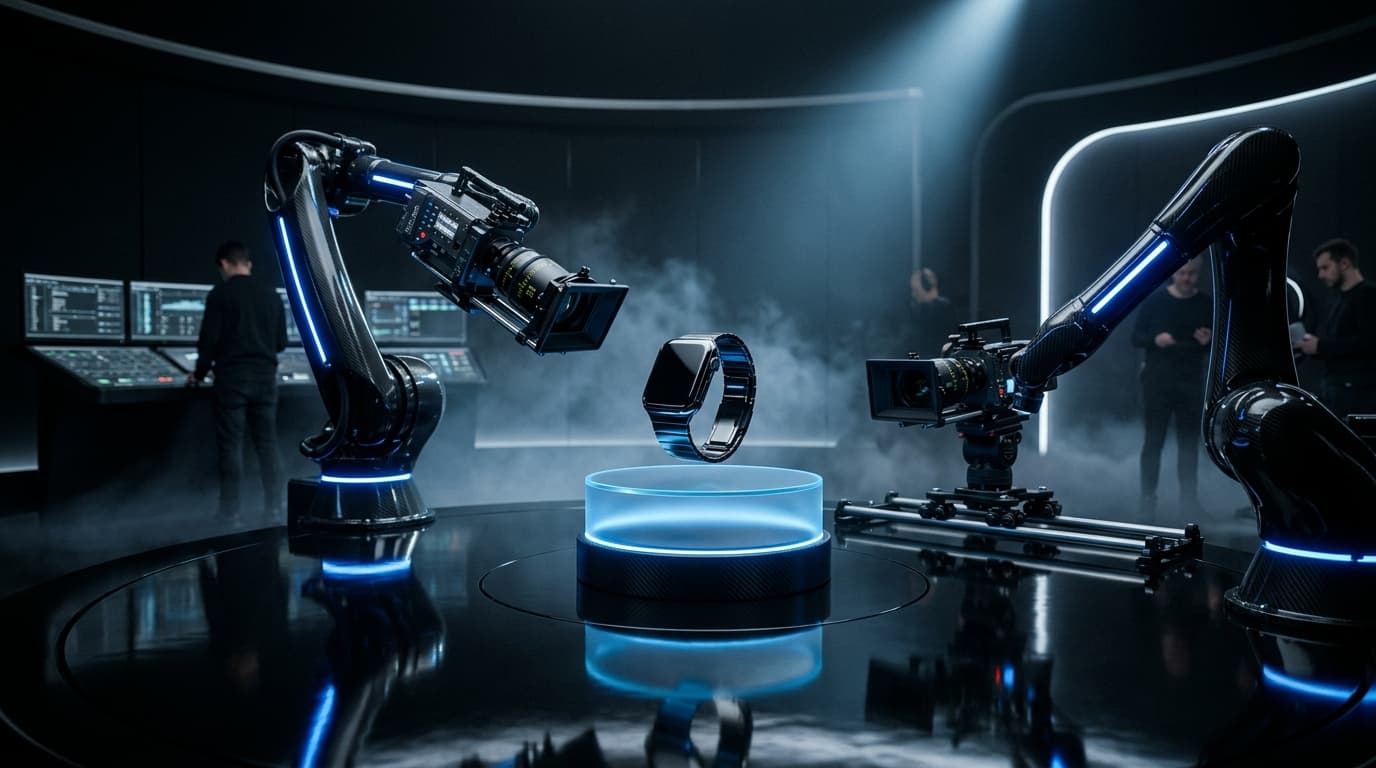
For years, the distinction between small businesses and enterprise brands was immediately apparent in their visual marketing. Big brands used expensive agencies to produce glossy, cinematic brand films that established authority and trust, while small businesses relied on basic, functional ads that struggled to project the same level of credibility. Cinematic AI advertising levels this playing field. It gives small businesses the tools to project a premium, high-end brand identity without needing a massive corporate budget.
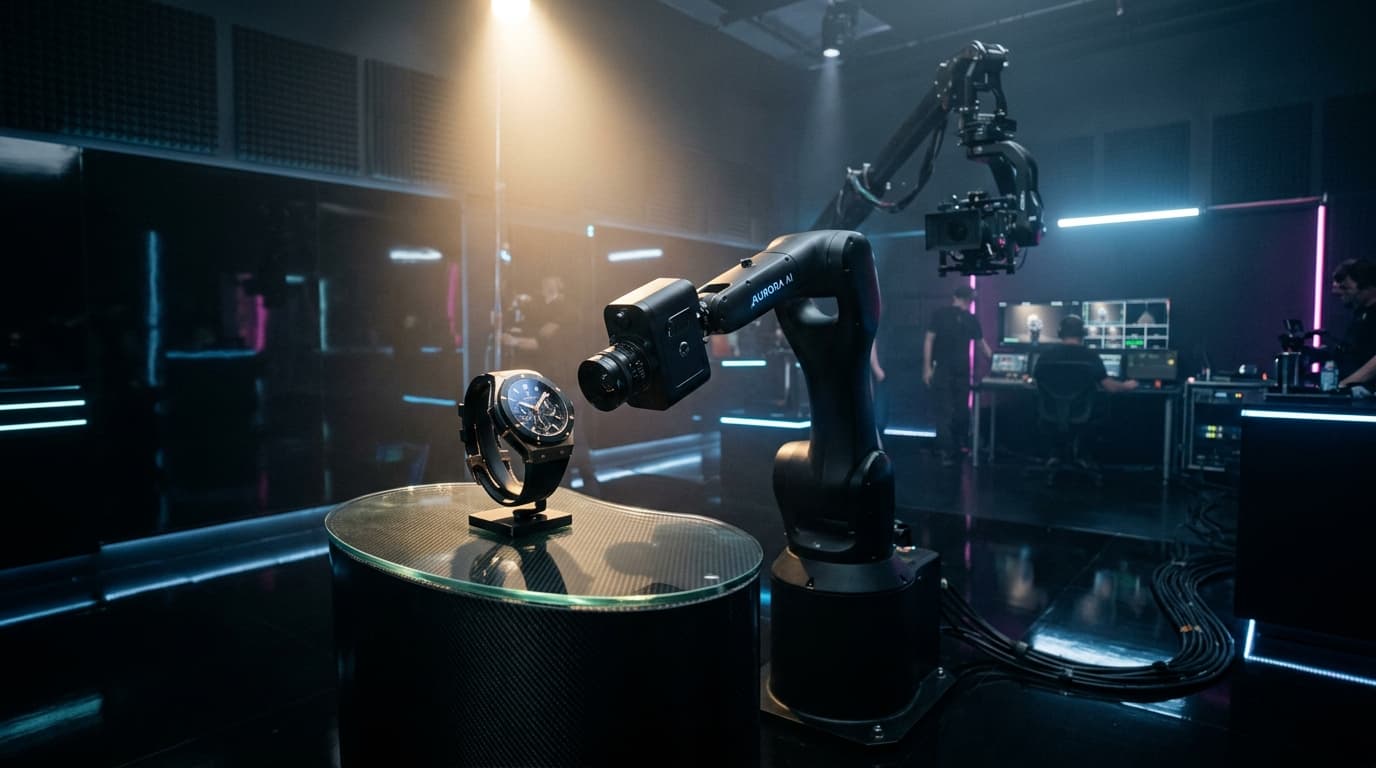
With generative AI, a small cosmetics brand can produce a commercial set in a luxury marble showroom with complex volumetric lighting, slow-motion water splashes, and high-fashion model close-ups. A boutique watchmaker can place their product in a zero-gravity environment or a sleek, futuristic wind tunnel, highlighting the watch's design with macro camera moves. These high-end visuals build immediate trust, making a small business look like an established, premium brand from the first impression.
This capability is especially valuable for product-focused brands. Traditionally, shooting clean, high-end product films required specialized macro lenses, motorized camera sliders, and complex lighting rigs. Using advanced AI image and video generation pipelines, an editor can lock in the product's exact label and dimensions, then render it in a variety of cinematic environments. This allows small businesses to create stunning product demonstrations that highlight craftsmanship and build customer desire.
In addition, AI-powered production allows small businesses to tell deeper stories. A brand can create a cinematic brand film that illustrates their mission, values, and origin story, using stylized visual sequences to build an emotional connection with the audience. This narrative depth helps small brands stand out in crowded markets, converting casual viewers into loyal customers by presenting a professional, polished image.
By utilizing cinematic AI ads across search, social, and web channels, small businesses can build a cohesive, premium brand presence that rivals their largest competitors. The ability to project this level of authority helps small brands close deals, attract high-value clients, and scale their operations globally, proving that creative quality is no longer dictated by the size of your bank account.
AI Video Production Workflow for Small Businesses
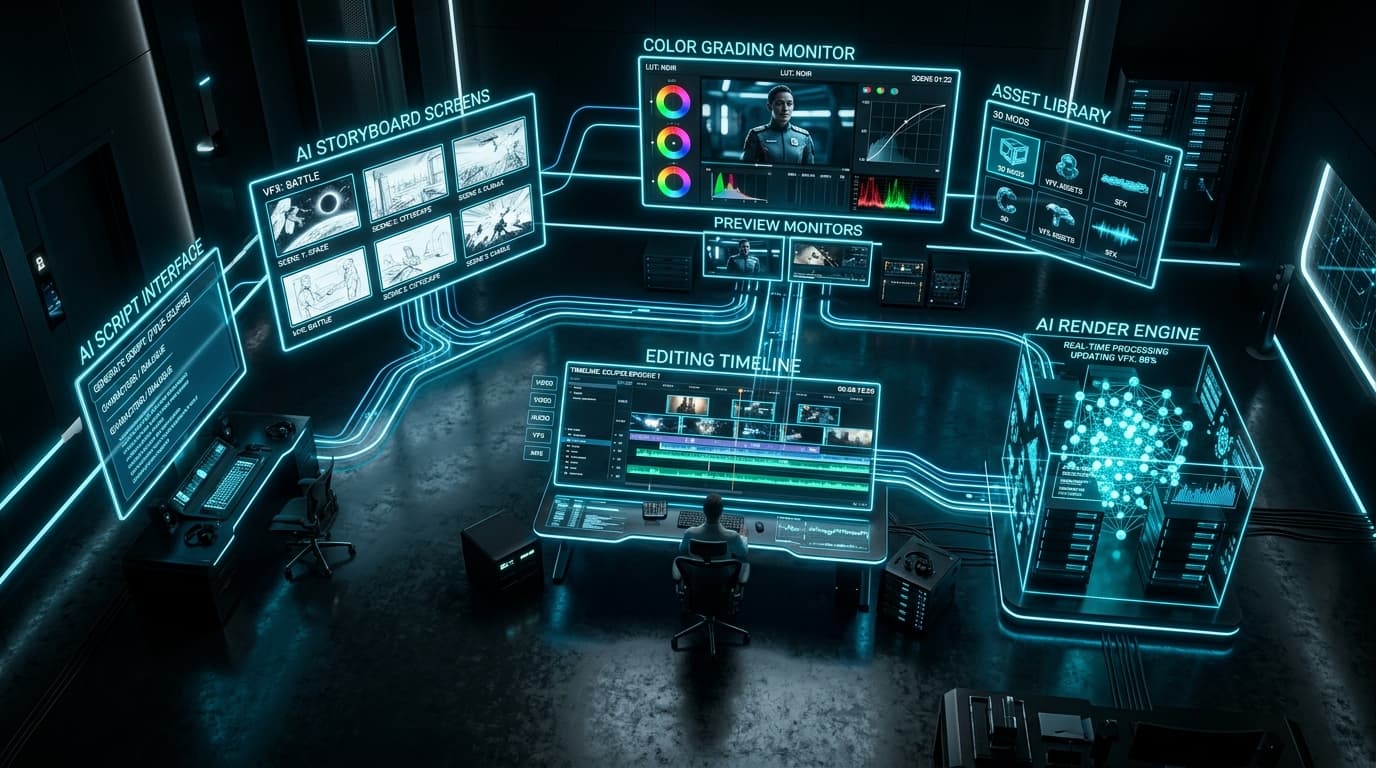
To produce consistent, high-converting commercials, businesses must move away from unstructured experimentation and follow a disciplined production pipeline. While generative AI tools are powerful, they require a structured workflow to deliver professional results. A scattershot approach to prompting yields inconsistent visual styles and weak messaging. At Neural Noir, we follow a rigorous 8-stage production workflow that combines strategic marketing with advanced technical execution to build high-performing campaign assets.
1. Strategic Discovery: The workflow begins by defining the campaign's goals, target audience, and primary hooks. We identify the product's key benefits, analyze competitor ads, and select the core visual style (e.g., moody noir, minimalist luxury, or high-energy tech). This step ensures that all visual assets are designed to drive conversions.
2. Scriptwriting: Next, we write a structured script focused on user retention. The script is designed to capture attention in the first three seconds with a strong visual hook, present the problem, showcase the product as the solution, and conclude with a clear Call to Action (CTA). We write different script variations to test various messaging angles.
3. Storyboarding: With the script finalized, we create a detailed storyboard that maps out the visual composition, camera movement, and lighting for every scene. We write specific prompt guides for the AI models, detailing characters, objects, camera lenses, and action steps to keep the generation process organized.
4. Generative AI Synthesis: This is where we render the base visual assets. We generate high-resolution images of the characters, products, and environments, then use video models to animate those elements. We run multiple variations to ensure we have a wide selection of movement and angles for the final cut.
5. Editorial Assembly: Our editors compile the raw AI video generations into a cohesive narrative, aligning the visuals with the script's pacing and rhythm. We apply temporal stabilization and frame interpolation to smooth out motion artifacts, ensuring that the transitions look clean and professional.
6. Cinematic Color Grading: We apply custom color palettes and Lookup Tables (LUTs) to the video, unifying the different clips under a single visual tone. This step enhances the atmosphere, increases contrast, and gives the video a polished, cinematic finish that elevates the overall production value.
7. Audio Engineering: We render the finalized AI voiceover, then mix it with a premium music track and layer in custom sound design (foley, transitions, and ambient sounds). This builds a rich auditory experience that complements the visuals, driving emotional engagement and reinforcing key messages.
8. Multi-Platform Optimization: Finally, we export the commercial in multiple formats and aspect ratios (e.g., 9:16 for TikTok, 1:1 for Instagram Feed, and 16:9 for YouTube). We verify that all text overlays, branding elements, and safety zones are correctly positioned, delivering a suite of assets ready for deployment.
Best AI Tools for Small Businesses
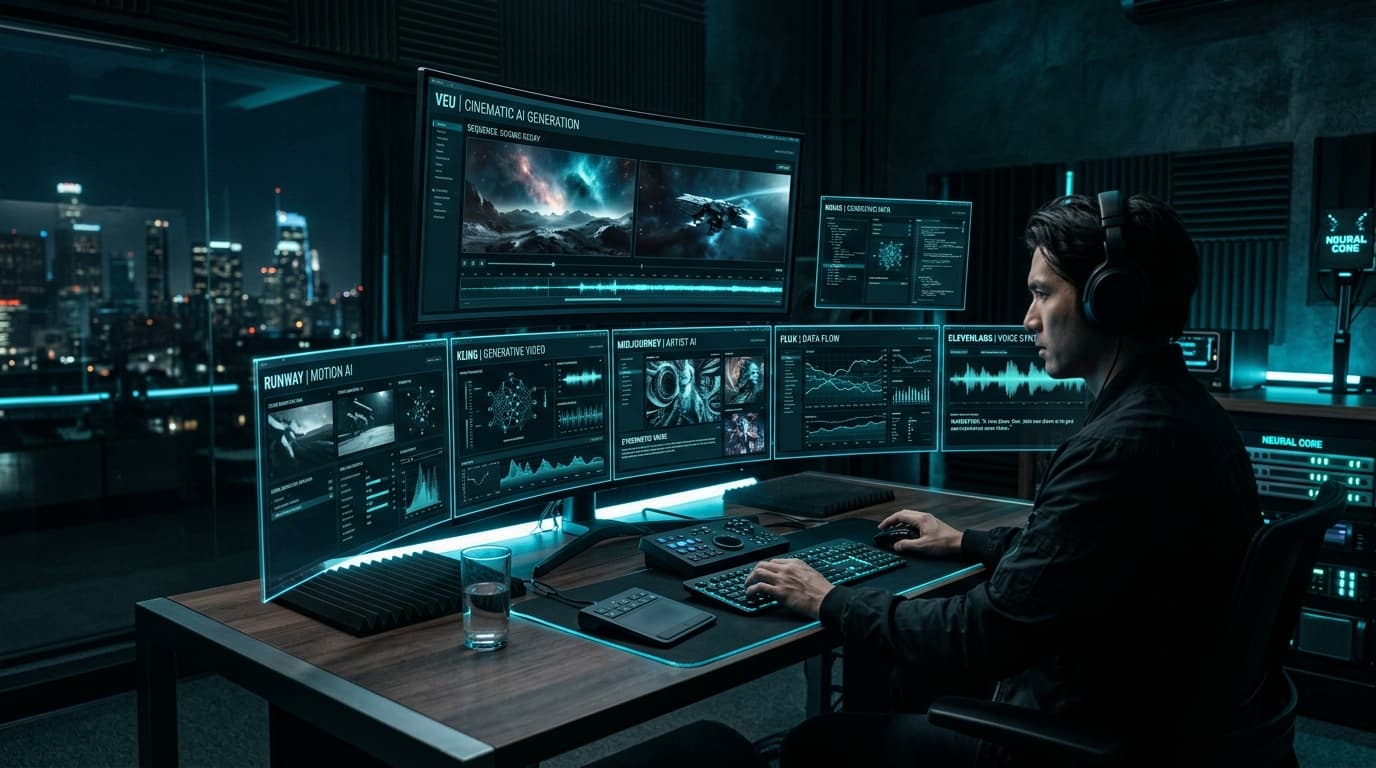
The generative AI ecosystem is evolving rapidly, with new models and platforms emerging regularly. For small businesses looking to build an in-house production setup, navigating these tools can be challenging. Each platform has its own strengths, rendering styles, and interface designs. Understanding what each tool does best helps businesses build a workflow that meets their creative requirements.
Google Veo: Google's advanced generative video model excels at rendering hyper-realistic details, complex environmental physics, and natural human movement. It is a powerful tool for brands that need highly accurate physics, clean lighting, and consistent action in their commercial video sequences.
Runway: A popular choice in AI video generation, Runway (particularly the Gen-3 Alpha model) offers deep motion control, allowing creators to guide camera movements, speed, and transitions with high precision. It is ideal for producing dynamic, high-energy video sequences with custom camera paths.
Kling AI: Kling is known for its realistic physics simulation, rendering complex physical interactions—such as liquid pouring, fabric movement, and smoke—with impressive accuracy. It is highly effective for product demonstrations that require realistic material interactions.
Midjourney: The industry standard for high-end static image synthesis, Midjourney (V6) produces stunning cinematic lighting, complex textures, and high-fashion aesthetics. It is the best tool for creating mood boards, concept art, and high-resolution background plates for commercial composites.
Flux: A state-of-the-art open-source image model, Flux excels at rendering clean, accurate text overlays within generated images. This makes it highly useful for creating ad graphics, social media banners, and product packaging illustrations that require embedded text.
ElevenLabs: The leading platform for AI voice synthesis, ElevenLabs generates highly realistic, expressive narrations in dozens of languages. Its voice cloning and emotional control capabilities allow brands to create consistent, premium voice tracks for their entire ad library.
Rather than relying on a single tool, professional production pipelines combine these platforms to utilize the unique strengths of each. For example, a creator might generate background plates in Midjourney, animate them using Runway, overlay product text with Flux, and add a cinematic voiceover from ElevenLabs. This integrated approach delivers the highest quality results.
Common Mistakes Businesses Make with AI Ads
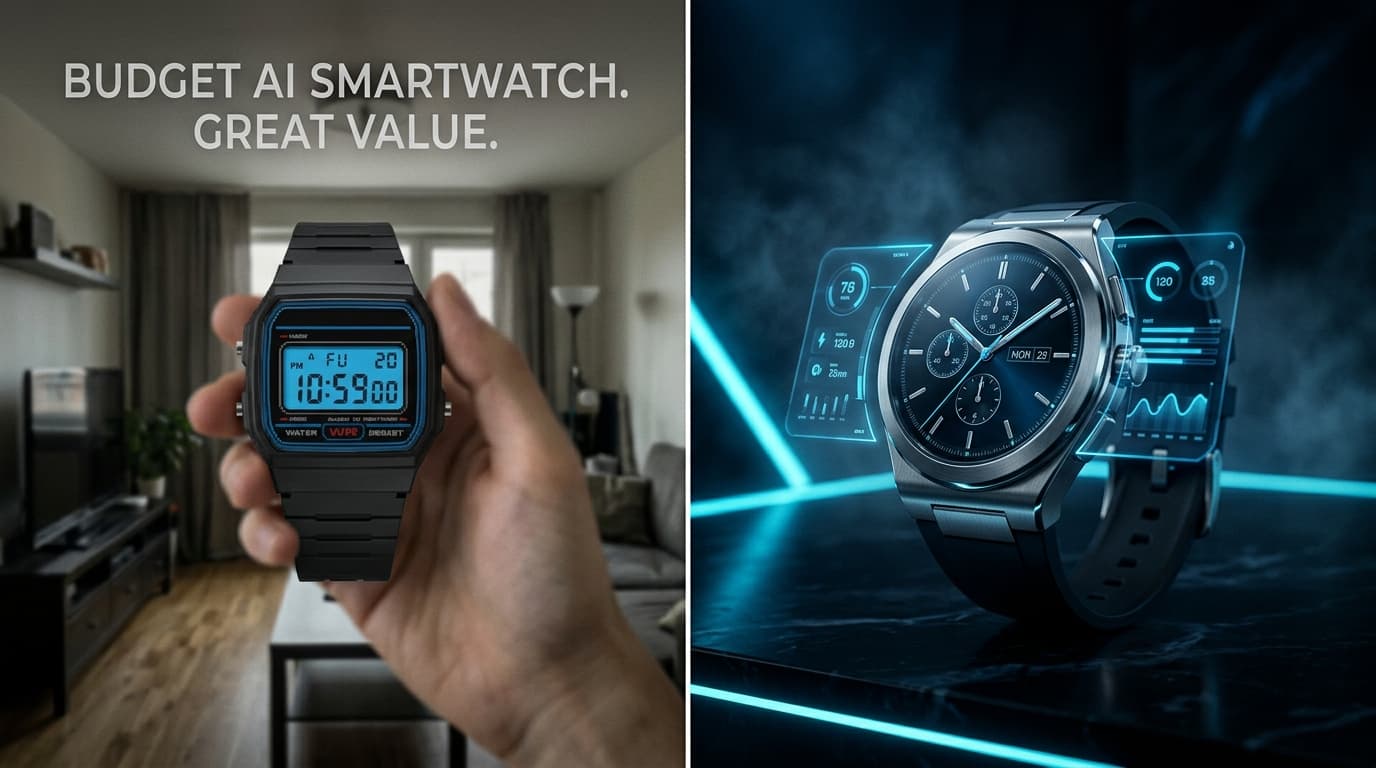
As generative AI tools become more accessible, many small businesses rush to deploy AI-generated ads without a clear strategy. While these tools make it easy to create content, they also make it easy to produce low-quality, generic advertising that fails to connect with audiences. Recognizing common mistakes helps brands avoid wasting ad spend on ineffective campaigns.
The most common pitfall is relying on raw, unedited AI outputs. Raw video generations often contain minor visual glitches, unnatural motion, or weird artifacts that immediately signal "AI-generated" to the viewer. Without professional post-production—such as editing, color grading, stabilization, and sound design—these ads look cheap and unprofessional, which can damage brand credibility.
Another common mistake is weak prompt engineering. Simple, generic prompts produce generic visuals that look like stock photos. To create unique, eye-catching imagery, creators must write detailed, specific prompts that describe lighting direction, lens types, depth of field, color grading styles, and camera movement. A lack of prompting expertise limits the quality of the final output.
Many brands also fail to maintain visual consistency across their campaigns. Because AI models generate assets one frame or clip at a time, keeping characters, products, and color schemes consistent across multiple scenes requires advanced technical setups (like custom LoRA models). Without these, ads look disjointed and confusing to viewers.
Additionally, businesses often overuse flashy AI effects at the expense of core storytelling. An advertisement filled with surreal morphing effects and glowing transitions might capture attention for a second, but it will fail to drive conversions if it lacks a clear script, product benefit, and call to action. Visual effects should support the story, not replace it.
Finally, ignoring professional audio design is a major error. A stunning cinematic video paired with a low-quality, robotic voiceover or poorly mixed music feels amateur. Audiences respond to rich, multi-layered audio experiences. High-quality sound design and natural voiceovers are essential to reinforcing your message and building emotional connection.
To avoid these mistakes, businesses must approach AI advertising as a disciplined production process. This requires combining generative tools with traditional design principles, strategic copywriting, and professional editing. Brands that invest in this level of quality consistently outperform competitors who rely on raw, unedited outputs.
Why Human Creativity Still Matters
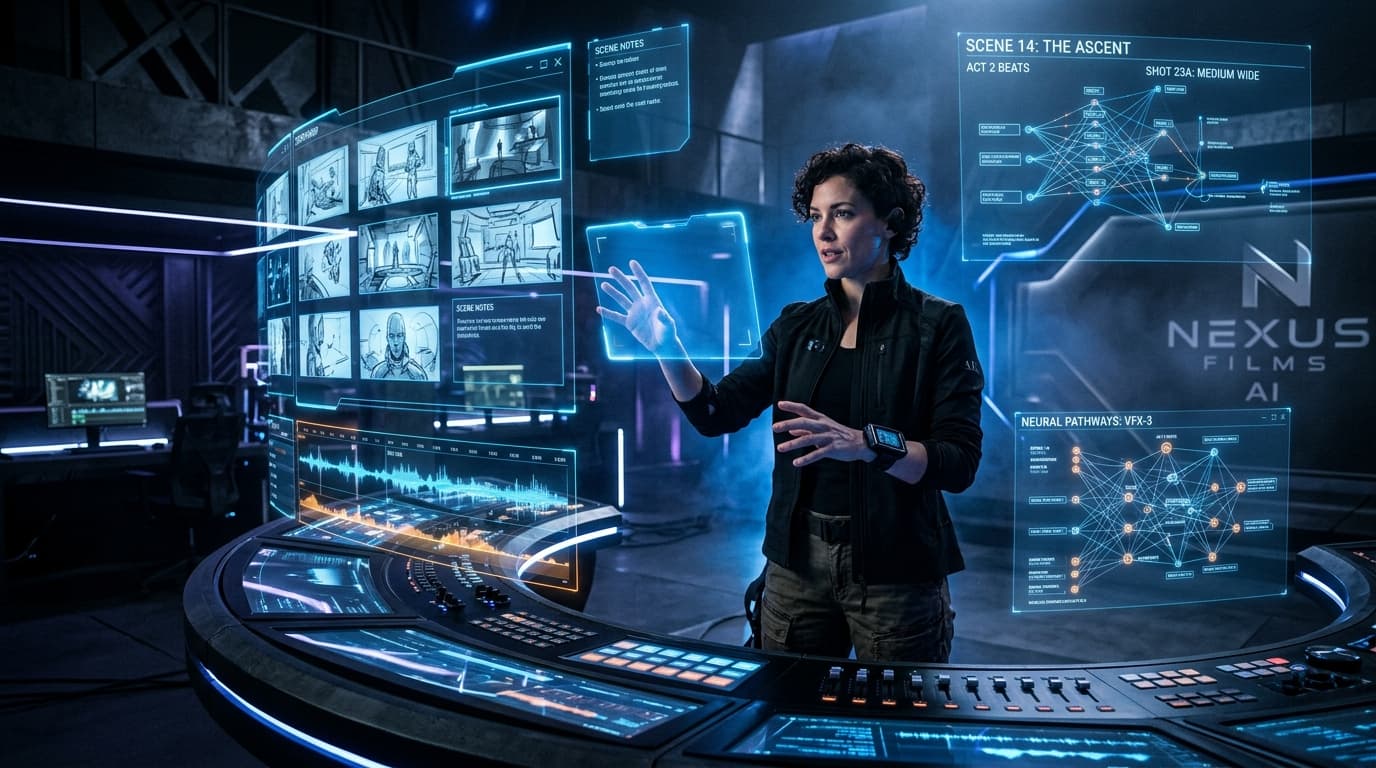
The rapid rise of generative AI has led some to believe that human copywriters, directors, and designers are becoming obsolete. The reality is quite the opposite. As AI tools lower the barrier to content creation, the volume of generic, low-effort advertising is increasing. In a crowded marketplace, the only way to stand out is through genuine human creativity, strategic storytelling, and refined artistic direction. AI is a powerful tool, but it requires a human artist to make it sing.
AI models do not understand human emotion, cultural nuances, or brand strategy. They generate pixels based on mathematical probabilities, matching prompts with patterns in their training data. An AI can write a grammatically correct headline, but it cannot create a deeply emotional story that resonates with a specific audience's challenges, values, and desires. That emotional connection requires human empathy and strategic insight.
Furthermore, human directors are essential to maintaining quality control throughout the production process. A director knows when a camera angle is off, when a transition feels jarring, or when a color scheme fails to match the brand's identity. They guide the AI models, combining outputs from different tools, editing clips for pacing, and applying professional finishing touches to ensure the final product meets commercial standards.
This is why professional AI advertising agencies like Neural Noir create significant value. We do not simply press "Generate" and deliver the raw results. We act as strategic partners, combining our marketing expertise, filmmaking experience, and post-production skills with advanced AI pipelines. We build custom workflows that lock in product consistency, enforce brand guidelines, and deliver cohesive, high-converting campaigns.
Ultimately, the future of advertising belongs to the hybrid model: human-directed, AI-powered. By combining machine speed and efficiency with human empathy, strategy, and artistic vision, ambitious brands can build powerful, scalable marketing systems that drive growth and build long-term brand equity.
Frequently Asked Questions
Ready to Lead the Neural Revolution?
integrate our high-velocity AI Growth Marketing pipelines into your acquisition loops.