AI Cinematic Production Agency: How Brands Create Hollywood-Quality Commercials with Artificial Intelligence
AI Cinematic Production Agency: How Brands Create Hollywood-Quality Commercials with Artificial Intelligence
Table of Contents
- Introduction
- 1. What Is an AI Cinematic Production Agency?
- 2. Why Traditional Commercial Production Is No Longer Enough
- 3. The Rise of AI Cinematic Production
- 4. Inside a Professional AI Cinematic Production Workflow
- 5. The Art of Cinematic Storytelling in AI Commercials
- 6. Hollywood Filmmaking Techniques Used in AI Production
- 7. Essential AI Tools Powering Modern Cinematic Production
- 8. Industries Transforming with AI Cinematic Production
- 9. Why AI Cinematic Commercials Deliver Better Marketing Results
- 10. Common Mistakes That Make AI Commercials Look Cheap
- 11. Why Human Creativity Remains the Heart of AI Production
- 12. The Future of AI Cinematic Production
Introduction
The advertising industry is undergoing its most significant transformation since the arrival of digital marketing.
For decades, creating a cinematic commercial meant assembling large production crews, renting expensive camera equipment, scouting multiple filming locations, hiring actors, securing permits, and investing weeks—sometimes months—into production. High-quality advertising was often reserved for enterprise companies with million-dollar marketing budgets, while startups and growing brands struggled to compete.
Today, that reality is changing.
Artificial Intelligence is reshaping the creative process, allowing brands to produce visually stunning, emotionally engaging, and cinematic commercial content faster than ever before. What once required a full-scale production team can now be achieved through a combination of creative strategy, advanced AI workflows, cinematic direction, and professional post-production.
However, there is a common misconception surrounding AI-generated content.
Many businesses assume that typing a simple prompt into an AI tool automatically results in a Hollywood-quality commercial. In reality, the difference between an average AI-generated video and a premium cinematic advertisement lies not in the technology itself, but in the expertise behind its execution.
This is where an AI Cinematic Production Agency plays a vital role.
Rather than simply generating AI videos, a professional agency combines artificial intelligence with the timeless principles of filmmaking, storytelling, cinematography, editing, color grading, and creative direction. AI becomes a production partner—not a replacement for creativity.
As audiences become increasingly selective and digital platforms grow more competitive, brands can no longer rely on generic marketing content. Every advertisement competes for attention against streaming platforms, premium brand campaigns, cinematic trailers, and creator-driven content. To stand out, businesses need more than beautiful visuals—they need stories that resonate and production quality that builds trust.
This guide explores how modern AI Cinematic Production Agencies help businesses create Hollywood-quality commercials that capture attention, strengthen brand identity, and scale creative production without the traditional limitations of time, cost, and logistics.
Whether you're a startup preparing for your first product launch, a marketing leader searching for faster creative workflows, or an enterprise brand exploring the future of commercial production, understanding how cinematic AI production works will help you make smarter creative decisions.
1. What Is an AI Cinematic Production Agency?
Artificial Intelligence has made content creation more accessible than ever before.
Today, anyone can generate images, videos, voiceovers, or animations using publicly available AI tools. Yet despite these technological advancements, most AI-generated advertisements still fail to achieve the visual quality, emotional impact, and storytelling standards expected from premium commercial campaigns.
This is because professional advertising is never built on technology alone.
An AI Cinematic Production Agency is a specialized creative studio that combines advanced artificial intelligence with the principles of professional filmmaking to produce high-end commercial content for modern brands.
Unlike traditional video production companies that depend entirely on physical cameras, locations, actors, and large production crews, AI production agencies leverage intelligent creative workflows to accelerate production while maintaining exceptional visual quality.
At its core, an AI Cinematic Production Agency focuses on one objective:
Creating cinematic commercial experiences that feel emotionally authentic, visually premium, and strategically aligned with business goals.
Rather than replacing filmmakers, AI expands their creative capabilities.
A modern production agency typically combines expertise in:
- Brand strategy
- Creative direction
- Commercial storytelling
- Prompt engineering
- AI image generation
- AI video generation
- Cinematic shot planning
- Visual continuity
- Motion design
- Professional editing
- Color grading
- Sound design
- Multi-platform content optimization
Every stage contributes to a polished final product that feels intentional rather than artificially generated.
More Than AI Generation
One of the biggest misconceptions about AI advertising is that success comes from generating impressive visuals.
In reality, visual generation is only one step within a much larger production pipeline.
Professional agencies begin by understanding the client's business objectives. Questions often include:
• Who is the target audience?
• What emotional response should the advertisement create?
• Which platform will distribute the campaign?
• What makes the product different?
• How should the brand be perceived?
• What action should viewers take?
Only after answering these strategic questions does production begin.
This approach ensures every visual supports a larger narrative rather than existing simply because it looks impressive.
The Difference Between AI Content and Cinematic AI Production
Not all AI-generated videos are created equally.
Many businesses experiment with AI tools and produce short clips that appear visually interesting but lack consistency, storytelling, and commercial effectiveness.
Professional cinematic production goes much further.
Instead of creating isolated AI scenes, agencies develop complete visual systems that maintain:
• Character consistency
• Product accuracy
• Lighting continuity
• Camera language
• Brand identity
• Emotional pacing
• Narrative structure
• Cinematic composition
These elements transform individual AI-generated assets into a cohesive advertising experience.
The result is advertising that feels premium, believable, and emotionally engaging rather than experimental.
Why Brands Are Turning to AI Cinematic Production Agencies
Modern brands face unprecedented pressure to produce content at scale. A single marketing campaign may require:
• Website hero videos
• Social media advertisements
• Vertical short-form content
• Product launch films
• YouTube commercials
• Paid advertising creatives
• Behind-the-scenes content
• Email marketing visuals
• Event presentations
Creating each asset through traditional production methods can be expensive and time-consuming.
AI-powered production offers a more agile approach.
By integrating artificial intelligence into professional creative workflows, agencies help businesses:
• Reduce production timelines
• Produce more creative variations
• Test multiple advertising concepts
• Maintain visual consistency
• Scale campaigns across platforms
• Adapt content for different audiences
• Increase creative efficiency without sacrificing quality
For startups, this means accessing cinematic advertising that was previously beyond reach.
For enterprise organizations, it means producing more content while maintaining strict brand standards.
Key Takeaway
An AI Cinematic Production Agency is not defined by the AI tools it uses but by the creative expertise that guides those tools.
The future of commercial advertising belongs to brands that combine intelligent technology with timeless storytelling, cinematic craftsmanship, and strategic creative direction.
Artificial Intelligence accelerates production. Human creativity transforms it into advertising that audiences remember.
2. Why Traditional Commercial Production Is No Longer Enough
For decades, traditional commercial production represented the gold standard of brand advertising.
Major companies invested millions of dollars into television commercials, product films, luxury brand campaigns, and cinematic advertisements. Every production involved extensive planning, large creative teams, expensive filming equipment, multiple shooting locations, actors, directors, editors, sound designers, and post-production specialists.
While this approach produced unforgettable advertising campaigns, it also created significant barriers for businesses that lacked enterprise-level budgets.
Today, the marketing landscape has changed dramatically.
Consumers expect brands to produce fresh, engaging, and visually compelling content every day—not every quarter.
Social media platforms reward consistency.
Advertising algorithms reward creative performance.
Audiences reward originality.
Unfortunately, traditional production workflows struggle to meet these expectations.
Businesses can no longer afford to spend months producing a single commercial while competitors publish new campaigns every week.
The demand for speed, scalability, and creative flexibility has fundamentally changed how modern advertising is produced.
The Rising Cost of Traditional Commercial Production
Producing a high-quality commercial has always required substantial investment. A single campaign often includes costs such as:
• Pre-production planning
• Creative strategy
• Scriptwriting
• Storyboarding
• Location scouting
• Camera rentals
• Lighting equipment
• Film crews
• Directors
• Actors and talent
• Wardrobe and styling
• Set design
• Transportation
• Catering
• Editing
• Visual effects
• Color grading
• Sound mixing
• Music licensing
Even a relatively small commercial can require weeks of preparation and thousands of dollars before filming begins.
For startups and growing businesses, these costs often make premium advertising financially impossible.
Rather than investing in storytelling, many companies settle for generic stock footage, low-budget promotional videos, or static social media graphics that fail to capture audience attention.
The result is predictable: their advertising blends into the background instead of standing out.
Modern Consumers Expect Hollywood-Level Content
The internet has fundamentally changed audience expectations. Every day, consumers watch Netflix originals, Apple product launches, Nike commercials, luxury automotive films, cinematic creator content, and high-end YouTube productions. These experiences redefine what people consider "good content."
When audiences encounter an advertisement, they no longer compare it only to competing businesses. They compare it to every premium visual experience they've consumed online. That means even small brands must compete with cinematic production quality if they want to earn attention.
Visual excellence is no longer a luxury. It has become a competitive advantage.
Social Media Rewards Creative Velocity
Modern advertising is no longer built around one campaign per year. Brands now create content continuously. Platforms like Instagram, TikTok, YouTube, LinkedIn, and Meta encourage businesses to publish regularly because consistent creative activity increases visibility and audience engagement.
Successful brands often produce product launch videos, short-form advertisements, brand storytelling campaigns, seasonal promotions, behind-the-scenes content, customer testimonials, educational videos, website hero videos, and paid advertising creatives.
Producing this volume of content using traditional filmmaking methods quickly becomes expensive and operationally difficult. As demand increases, production bottlenecks become unavoidable. Creative teams spend more time managing logistics than creating ideas.
Why Speed Has Become a Competitive Advantage
Marketing opportunities rarely wait. A product launch, industry trend, viral moment, or seasonal event can create a short window where brands have an opportunity to capture significant attention.
Traditional production timelines often look like this: Weeks 1–2 for planning, Week 3 for storyboarding, Week 4 for location approvals, Week 5 for production, Weeks 6–7 for editing, Week 8 for revisions, and Week 9 for final delivery. By the time the campaign launches, market conditions may already have changed.
Modern brands require production systems capable of responding within days rather than months. Speed is no longer simply an operational benefit—it directly influences business growth.
3. The Rise of AI Cinematic Production
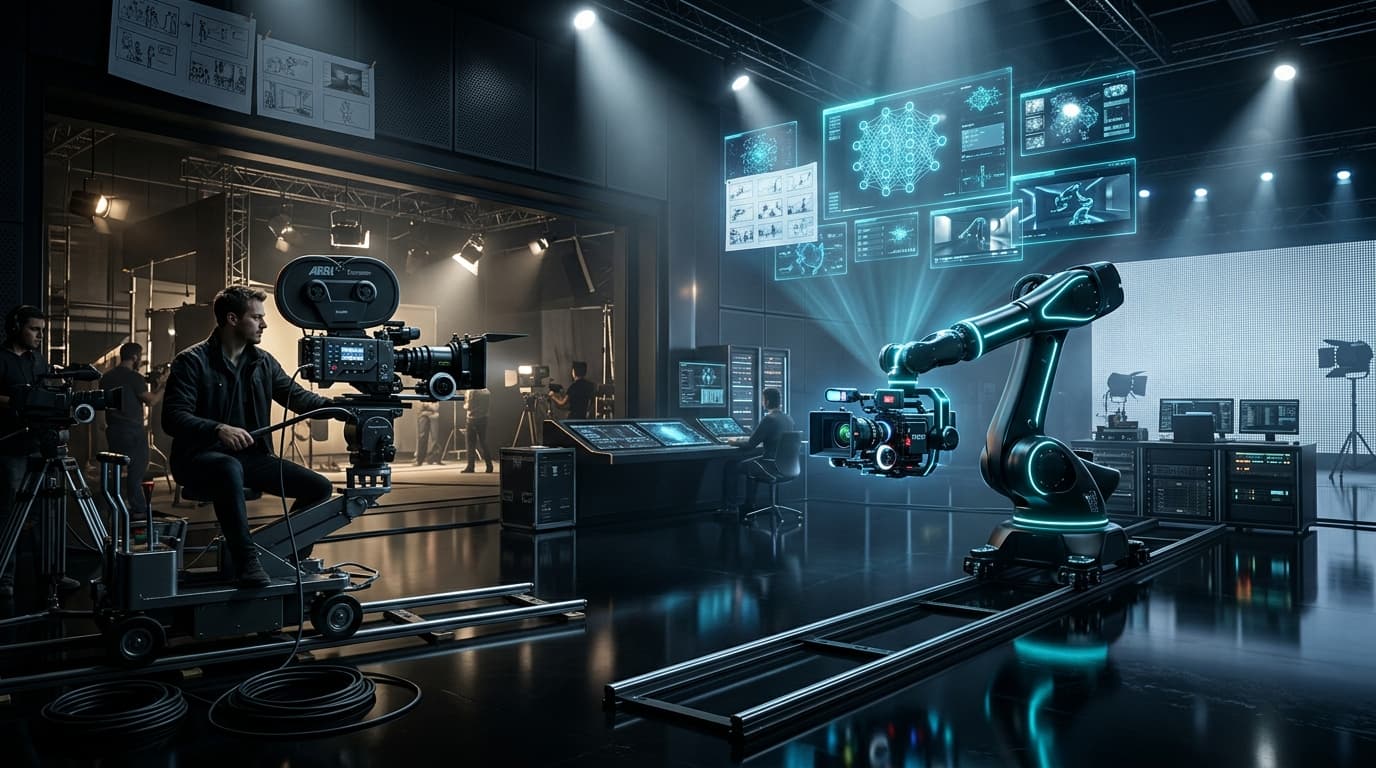
Artificial Intelligence is transforming commercial filmmaking in much the same way digital cameras transformed photography. It is not replacing creativity—it is expanding what creative professionals can accomplish.
An AI Cinematic Production Agency combines intelligent technology with cinematic storytelling to create premium advertising faster, more efficiently, and at a scale that traditional production struggles to match.
Instead of beginning every project from scratch, AI-powered workflows accelerate many production stages while preserving artistic control. Creative professionals remain responsible for the vision, while Artificial Intelligence enhances the execution.
AI Is Changing the Entire Production Pipeline
Modern AI production extends far beyond image generation. Today's professional workflow includes AI-assisted creative research, concept development, mood board creation, storyboarding, visual exploration, environment design, character generation, product visualization, motion generation, voice synthesis, audio enhancement, editing assistance, localization, and content adaptation.
These capabilities dramatically reduce production time while allowing creative teams to focus on storytelling rather than repetitive technical tasks.
Human Creativity Remains the Competitive Advantage
One of the biggest myths surrounding AI production is that technology alone creates exceptional advertising. The reality is exactly the opposite.
The most successful cinematic AI commercials are guided by experienced creative professionals who understand human emotion, brand psychology, consumer behavior, cinematic language, narrative structure, visual composition, and creative strategy. AI generates possibilities, while humans choose the best direction. This collaboration produces advertising that feels authentic, emotionally engaging, and visually unforgettable.
From Production Bottlenecks to Creative Freedom
Perhaps the greatest advantage of AI cinematic production is not simply speed—it is freedom.
Creative teams are no longer constrained by expensive shooting locations, weather conditions, equipment availability, travel logistics, production scheduling, limited reshoots, or physical set construction. Instead, they can spend more time refining ideas, testing creative concepts, and delivering better storytelling.
That shift allows businesses to explore bold visual ideas that were previously impractical due to cost or complexity. For brands, this means more opportunities to experiment; for audiences, it means richer, more engaging advertising experiences.
Key Takeaway
Traditional commercial production established the foundation of modern advertising, but today's marketing environment demands greater speed, flexibility, and creative scalability.
AI Cinematic Production does not eliminate the artistry of filmmaking—it enhances it. By combining advanced artificial intelligence with human creativity, brands can produce Hollywood-quality commercial experiences faster, test more creative ideas, and compete in an increasingly visual digital world.
4. Inside a Professional AI Cinematic Production Workflow
Creating a Hollywood-quality commercial has never been about pressing a record button.
Likewise, producing a cinematic AI commercial is not about typing a prompt into an AI model and downloading the first generated video.
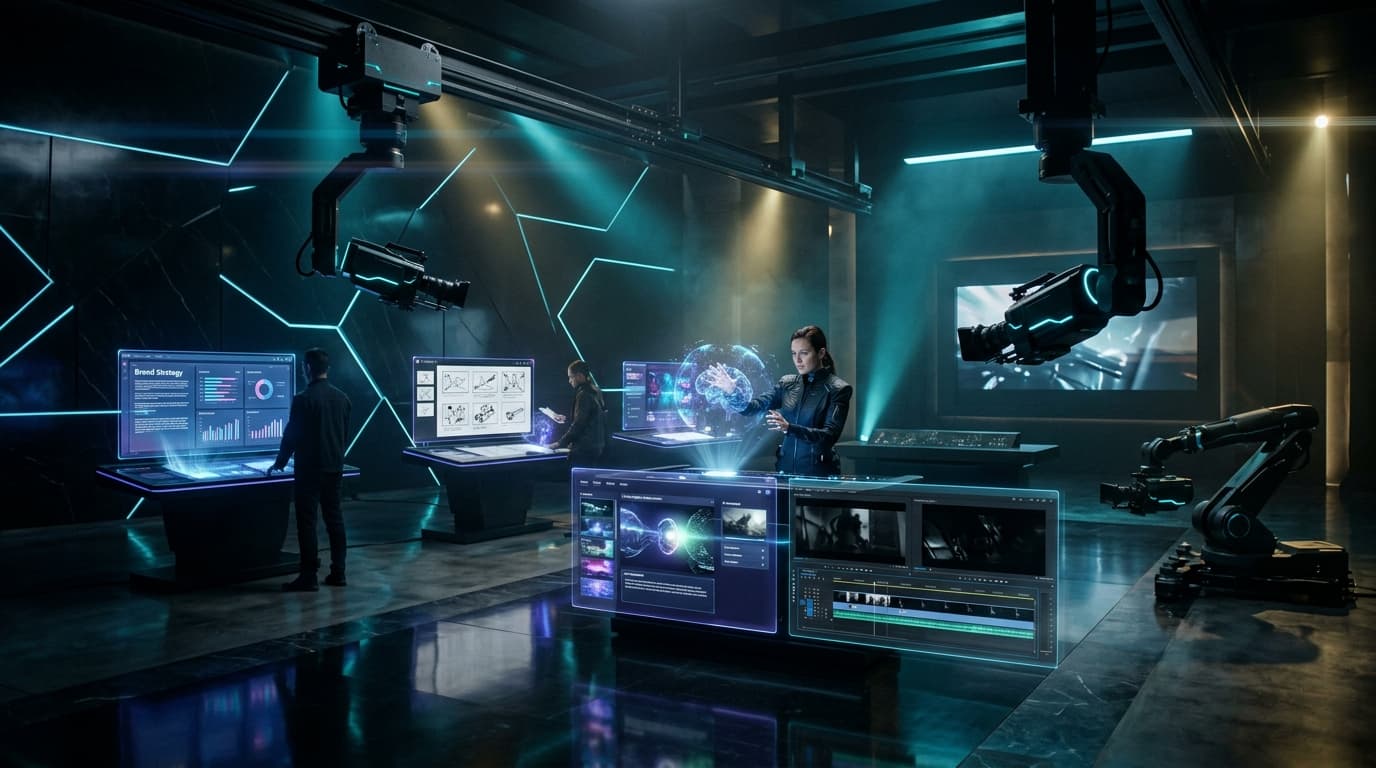
Professional AI production follows a carefully engineered workflow that combines creative strategy, filmmaking principles, artificial intelligence, and post-production craftsmanship into a unified process. Every stage serves a specific purpose; every creative decision supports the brand; every visual contributes to the final story.
At Neural Noir, we believe AI should accelerate creativity—not replace it. Our production workflow is designed to ensure that every commercial maintains premium cinematic quality while remaining strategically aligned with the client's marketing objectives.
Stage 1: Brand Discovery and Strategic Research
Every successful commercial begins with understanding the brand—not the software. Before a single frame is generated, professional production agencies invest time in research.
This phase focuses on answering critical questions: Who is the target audience? What problem does the product solve? How should customers feel after watching the advertisement? What makes the brand different from competitors? Which platforms will distribute the campaign? What visual style best represents the brand?
Understanding these factors creates a creative foundation that guides every production decision. Without strategy, even visually impressive AI content lacks purpose.
Stage 2: Creative Concept Development
Every memorable commercial starts with a compelling idea. Rather than generating random visuals, agencies build a clear creative concept around a central marketing message.
This stage includes: Campaign objectives, emotional positioning, story themes, mood exploration, visual inspiration, narrative structure, product positioning, and audience psychology.
Luxury brands rarely sell products directly—they sell aspiration. Technology brands sell innovation. Fitness brands sell transformation. Travel brands sell experiences. The creative concept determines how these emotions are translated into visual storytelling.
Stage 3: Scriptwriting and Storyboarding
Before AI generation begins, every scene should already exist on paper. Professional storyboards define camera angles, shot order, scene transitions, character movement, product placement, lighting references, and emotional pacing.
This planning stage dramatically reduces production errors while improving narrative consistency. Rather than allowing AI to make storytelling decisions, filmmakers remain in complete creative control. AI simply executes the vision more efficiently.
Stage 4: AI Asset Creation
Only after strategy, scripting, and planning are complete does the AI generation process begin. Depending on campaign requirements, AI assists in producing cinematic environments, characters, luxury product renders, atmospheric effects, background elements, motion sequences, architectural spaces, concept art, and visual references.
Professional agencies rarely accept the first AI output. Instead, they refine prompts, iterate on compositions, and continuously improve every visual until it matches the creative vision. Generation is only the beginning; refinement is where premium quality emerges.
Stage 5: Visual Consistency and Scene Refinement
Consistency separates professional AI production from amateur experimentation. One of the biggest challenges in AI-generated content is maintaining character identity, product accuracy, lighting direction, camera language, environmental continuity, color harmony, and brand identity.
Without consistency, viewers immediately recognize the content as artificial. Professional production agencies solve this through structured creative pipelines that maintain visual coherence across every scene. This attention to detail creates a seamless cinematic experience.
Stage 6: Editorial Storytelling
Editing is where individual scenes become a story. Professional editors determine scene duration, transition timing, emotional rhythm, product emphasis, narrative progression, and audience engagement.
A visually beautiful commercial can still fail if the pacing feels disconnected. Great editing ensures every second contributes to the overall narrative. The audience should never feel that scenes exist simply because they look impressive. Every frame must move the story forward.
Stage 7: Cinematic Color Grading
Color influences emotion more than most viewers realize. Luxury commercials often use carefully controlled color palettes to reinforce brand perception.
Professional color grading focuses on: mood consistency, brand colors, highlight control, shadow depth, contrast refinement, skin tone accuracy, and product realism.
Whether the goal is elegance, innovation, excitement, or exclusivity, color becomes one of the strongest storytelling tools available. This stage transforms technically correct visuals into emotionally compelling cinema.
Stage 8: Sound Design and Final Delivery
Many brands focus exclusively on visuals while overlooking sound. Yet audio dramatically influences how audiences perceive production quality.
Professional sound design includes ambient environments, cinematic impacts, product interaction sounds, music synchronization, voiceovers, audio mixing, and platform optimization.
Finally, campaigns are exported in multiple formats for website hero videos, YouTube, Instagram Reels, TikTok, LinkedIn, Meta Ads, digital presentations, and product launch events. Rather than delivering one generic video, agencies create optimized versions for every platform.
5. The Art of Cinematic Storytelling in AI Commercials
Technology can generate visuals. Only storytelling creates emotion.
The world's most successful commercials are remembered because they make audiences feel something—not because they demonstrate advanced technology.
Whether it's inspiration, curiosity, excitement, nostalgia, or aspiration, emotional storytelling transforms advertising into memorable experiences.
Artificial Intelligence does not eliminate storytelling. Instead, it gives creative professionals more freedom to explore ideas that would previously have required enormous production budgets.
Every Great Commercial Starts with Emotion
Consumers rarely purchase products based solely on specifications. They buy solutions. They buy identity. They buy aspiration.
Luxury watch advertisements rarely discuss gears. Sports brands rarely focus on fabric. Automotive commercials rarely begin with horsepower. Instead, they communicate ambition, freedom, confidence, and achievement. Successful AI commercials follow the same philosophy: products become symbols within larger emotional narratives.
Visual Storytelling Beyond Dialogue
Many of the most powerful cinematic advertisements contain very little dialogue. Instead, they rely on visual storytelling through composition, lighting, camera movement, facial expressions, environmental design, music, color, and editing rhythm.
Artificial Intelligence enables filmmakers to explore these cinematic techniques rapidly while preserving artistic control. When executed correctly, viewers remember the feeling long after they forget individual scenes. That emotional memory is what builds strong brands.
Storytelling Builds Brand Value
Every advertisement communicates more than a product—it communicates a brand's personality. Professional AI Cinematic Production Agencies understand that consistency in storytelling creates long-term brand recognition.
Each campaign should reinforce brand identity, customer trust, visual language, emotional positioning, and market perception. Rather than producing disconnected advertisements, successful agencies build cinematic worlds that audiences instantly associate with the brand. This is where storytelling becomes a strategic business advantage rather than simply a creative exercise.
Key Takeaway
Professional AI Cinematic Production is a structured creative discipline—not an automated shortcut.
Artificial Intelligence accelerates production, but strategy, storytelling, cinematography, editing, color grading, and sound design remain the foundations of exceptional commercial filmmaking. Brands that combine intelligent AI workflows with human creativity produce advertising that is not only visually stunning but emotionally memorable, commercially effective, and built to perform across every modern marketing platform.
6. Hollywood Filmmaking Techniques Used in AI Production
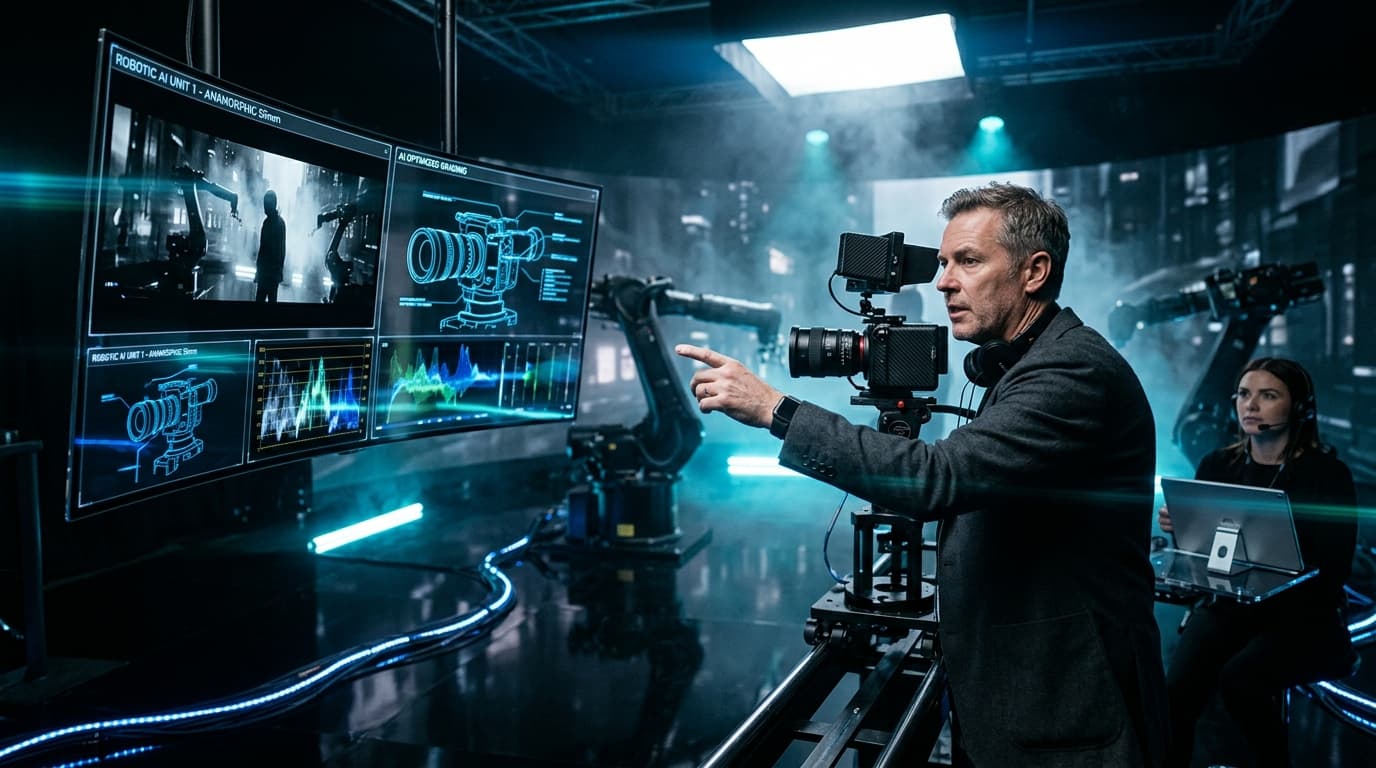
The difference between an ordinary AI-generated video and a premium cinematic commercial is rarely the AI model itself.
Instead, the difference lies in the filmmaking principles guiding every creative decision.
Hollywood productions are built on decades of cinematic expertise involving lighting, composition, storytelling, editing, sound design, and emotional pacing. Artificial Intelligence simply provides new tools to execute these techniques more efficiently.
A professional AI Cinematic Production Agency doesn't ask, "What can AI generate?" Instead, it asks: "How can we use AI to tell a better story?"
This mindset separates visually interesting content from truly memorable advertising.
Cinematic Lighting Creates Emotion
Lighting is one of the most powerful storytelling tools in filmmaking. Before audiences understand a product, they subconsciously respond to light.
Luxury brands often use controlled soft lighting to communicate elegance. Technology companies prefer cooler tones to represent innovation. Automotive commercials frequently combine dramatic contrast with directional lighting to create power and sophistication.
Professional AI production carefully designs lighting before generation begins. Rather than accepting default illumination, creative teams define: key light direction, rim lighting, practical lighting, ambient atmosphere, shadow depth, reflection control, and volumetric light beams. The result is imagery that immediately feels premium and emotionally engaging.
Camera Language Shapes Audience Perception
Every camera angle communicates meaning. Low-angle shots suggest authority and confidence. High-angle compositions create vulnerability. Close-ups establish intimacy. Wide shots create scale and atmosphere.
Professional AI production applies these filmmaking principles throughout commercial development. Rather than randomly generating scenes, agencies carefully plan: hero product shots, dynamic camera movement, slow cinematic push-ins, tracking sequences, drone-inspired perspectives, macro product details, and environmental establishing shots. These choices guide audience attention naturally while reinforcing the brand's message.
Composition Directs Visual Focus
Hollywood cinematographers never place elements randomly. Every frame is intentionally designed.
Professional AI commercials use principles such as: rule of thirds, leading lines, negative space, foreground framing, symmetry, layered depth, and balanced composition. These techniques make commercials feel polished and visually effortless.
Good composition reduces visual confusion while helping viewers immediately understand the most important subject within each frame.
Color Grading Defines Brand Identity
Color is more than visual styling. It is emotional branding.
Luxury fashion campaigns often use rich blacks and warm gold tones. Technology brands prefer clean whites and cool blues. Beauty brands frequently use soft pastel palettes. Automotive brands emphasize metallic contrast and dramatic highlights.
Professional color grading creates consistency across every scene while reinforcing brand personality. Instead of treating grading as the final adjustment, AI Cinematic Production Agencies consider color from the earliest stages of concept development.
Motion Creates Cinematic Energy
Static visuals rarely maintain audience attention. Movement creates life.
Modern AI production uses cinematic motion principles including: slow push-ins, orbit camera movement, handheld realism, smooth tracking shots, parallax depth, dynamic transitions, and natural environmental motion.
Movement should always support storytelling rather than distracting from it. Every motion decision should feel intentional.
Sound Design Completes the Experience
Many businesses underestimate sound. Yet audiences often judge production quality through audio before consciously analyzing visuals.
Professional commercial production combines: cinematic music, ambient environments, product interaction sounds, subtle impacts, atmospheric textures, premium voiceovers, and dynamic audio transitions. Strong sound design transforms beautiful visuals into emotionally immersive experiences.
7. Essential AI Tools Powering Modern Cinematic Production
Artificial Intelligence has rapidly expanded the creative possibilities available to filmmakers. Rather than relying on a single application, professional agencies build integrated production ecosystems where multiple AI tools contribute to different stages of the workflow.
The goal is not to automate creativity. The goal is to accelerate production while preserving artistic quality.
Google Veo
Google Veo represents one of the most significant advancements in AI video generation. It enables creators to develop realistic cinematic sequences with improved motion consistency, environmental understanding, and natural camera behavior. For commercial production, it offers exciting opportunities for concept development and high-quality visual storytelling.
Runway
Runway has become an important tool for AI-assisted filmmaking. Creative professionals use it for: video generation, motion refinement, scene extension, background replacement, object manipulation, and creative experimentation. Its flexibility makes it valuable throughout the production process.
Kling
Kling focuses on generating realistic motion and cinematic scene dynamics. Its ability to create physically believable movement makes it especially useful for commercial storytelling where realism is essential.
Midjourney
Before production begins, agencies often explore visual concepts through AI image generation. Midjourney excels at mood boards, concept art, character exploration, environment visualization, product styling, and creative inspiration. These assets help clients visualize campaigns before moving into full production.
Flux
Flux provides high-quality image generation with strong prompt interpretation and impressive realism. Many production teams use Flux during concept development and asset creation because of its detailed visual output and flexibility.
ElevenLabs
Great commercials require more than visuals. ElevenLabs enables realistic AI-generated voiceovers for: brand narration, product explainers, commercial dialogue, localization, and multi-language campaigns. Professional agencies combine AI voices with traditional sound design to produce polished commercial experiences.
Professional Editing Software
Artificial Intelligence does not eliminate editing. Professional post-production remains essential. Creative teams often refine AI-generated assets using advanced editing software for: scene assembly, motion graphics, color grading, audio mixing, visual effects, and final mastering. Editing remains one of the most important stages of premium commercial production.
8. Industries Transforming with AI Cinematic Production
Artificial Intelligence is reshaping nearly every industry that depends on visual communication. While the technology applies broadly, certain industries benefit particularly well from cinematic AI production because their products rely heavily on emotion, aesthetics, and storytelling.
Luxury Brands
Luxury products are sold through aspiration rather than specifications. AI enables luxury brands to create visually striking campaigns with premium environments, cinematic lighting, and sophisticated storytelling.
Fashion
Fashion thrives on movement, atmosphere, and identity. AI production allows fashion companies to rapidly produce lookbooks, campaign films, seasonal launches, and social media content while maintaining a premium visual identity.
Beauty & Skincare
Beauty brands require close-up product visuals, elegant lighting, and emotionally engaging storytelling. AI helps create premium commercial content while accelerating creative experimentation.
Automotive
Modern automotive advertising combines cinematic landscapes, dramatic camera movement, and emotional storytelling. AI production expands creative possibilities without the logistical complexity of traditional filming.
Real Estate
Developers increasingly use cinematic AI production for luxury property marketing, architectural visualization, and premium promotional content.
SaaS & Technology
Technology companies use cinematic AI production to explain complex products through visually engaging storytelling rather than technical presentations.
Hospitality & Travel
Hotels, resorts, and travel companies use cinematic AI production to create immersive destination experiences that inspire bookings through emotion rather than information.
Key Takeaway
Professional AI Cinematic Production Agencies succeed not because they have access to powerful software, but because they understand how to combine filmmaking principles, advanced AI tools, and strategic storytelling into a seamless creative process.
Technology provides the capability. Human creativity provides the vision. Together, they enable brands to produce premium commercial experiences that rival traditional Hollywood production while remaining faster, more scalable, and more adaptable to modern marketing demands.
9. Why AI Cinematic Commercials Deliver Better Marketing Results
The success of a commercial is no longer measured solely by its visual quality. Today's campaigns are evaluated by their ability to capture attention, create emotional engagement, drive conversions, and generate measurable business outcomes.
Artificial Intelligence is transforming these results by enabling brands to produce better creative, iterate faster, and adapt campaigns continuously.
Rather than investing months into a single advertisement, businesses can now develop multiple cinematic concepts, test them across platforms, and refine them based on real audience behavior. This shift changes advertising from a one-time creative project into an ongoing optimization process.
Faster Creative Iteration
One of the greatest strengths of AI Cinematic Production is the ability to explore multiple creative directions without restarting production.
Instead of creating one commercial, brands can test alternative opening scenes, different product presentations, multiple storytelling approaches, platform-specific edits, various call-to-actions, and different emotional tones.
This flexibility helps marketing teams discover which creative style resonates most with their audience.
Better Return on Investment
Traditional commercial production often requires significant financial investment before the first advertisement is even published. AI-powered production reduces many of these operational barriers by streamlining concept development, visualization, and production workflows.
Businesses benefit from: lower production costs, faster revisions, more creative experimentation, greater campaign flexibility, and improved production efficiency.
Rather than replacing quality, AI enables brands to achieve premium production standards more efficiently.
Personalized Advertising at Scale
Modern consumers expect personalized experiences. AI enables brands to adapt commercial content for different geographic markets, languages, audience segments, customer personas, advertising platforms, and product variations.
This level of personalization would be difficult and expensive using traditional production methods.
Continuous Campaign Optimization
Unlike traditional advertising, AI production encourages continuous improvement. Creative teams can analyze campaign performance using audience retention, watch time, click-through rate, engagement, conversion rate, and return on advertising spend.
These insights help guide future creative decisions, creating an advertising system that becomes stronger with every campaign.
10. Common Mistakes That Make AI Commercials Look Cheap
Artificial Intelligence provides extraordinary creative possibilities. However, technology alone cannot guarantee premium results.
Many AI-generated advertisements fail because they overlook the fundamentals of filmmaking.
Weak Creative Direction
Without a clear creative vision, AI simply produces random visuals. Professional production always begins with strategy.
Ignoring Storytelling
Beautiful imagery cannot compensate for a weak narrative. The strongest commercials communicate emotion before they communicate products.
Inconsistent Characters and Products
Changing facial features, inaccurate product details, or inconsistent environments immediately reduce credibility. Professional agencies invest significant effort into maintaining visual continuity throughout production.
Poor Lighting
Lighting communicates mood, quality, and emotion. Flat lighting often makes AI content feel artificial. Professional cinematic lighting dramatically improves realism.
Overusing AI Effects
More visual effects do not necessarily create better advertising. Luxury brands often achieve stronger results through subtle cinematic refinement rather than excessive visual complexity.
Weak Editing
Great editing determines rhythm, emotion, story progression, and audience attention. Even outstanding visuals require thoughtful editorial craftsmanship.
11. Why Human Creativity Remains the Heart of AI Production
Artificial Intelligence is changing how commercials are produced. It is not changing why people connect with stories. Audiences continue to respond to emotion, authenticity, aspiration, curiosity, and inspiration.
These qualities originate from human creativity. AI accelerates production, while creative professionals define purpose.
Professional AI Cinematic Production Agencies succeed because they combine technological innovation with artistic judgment. The future belongs to creative teams capable of directing AI rather than simply operating it.
12. The Future of AI Cinematic Production
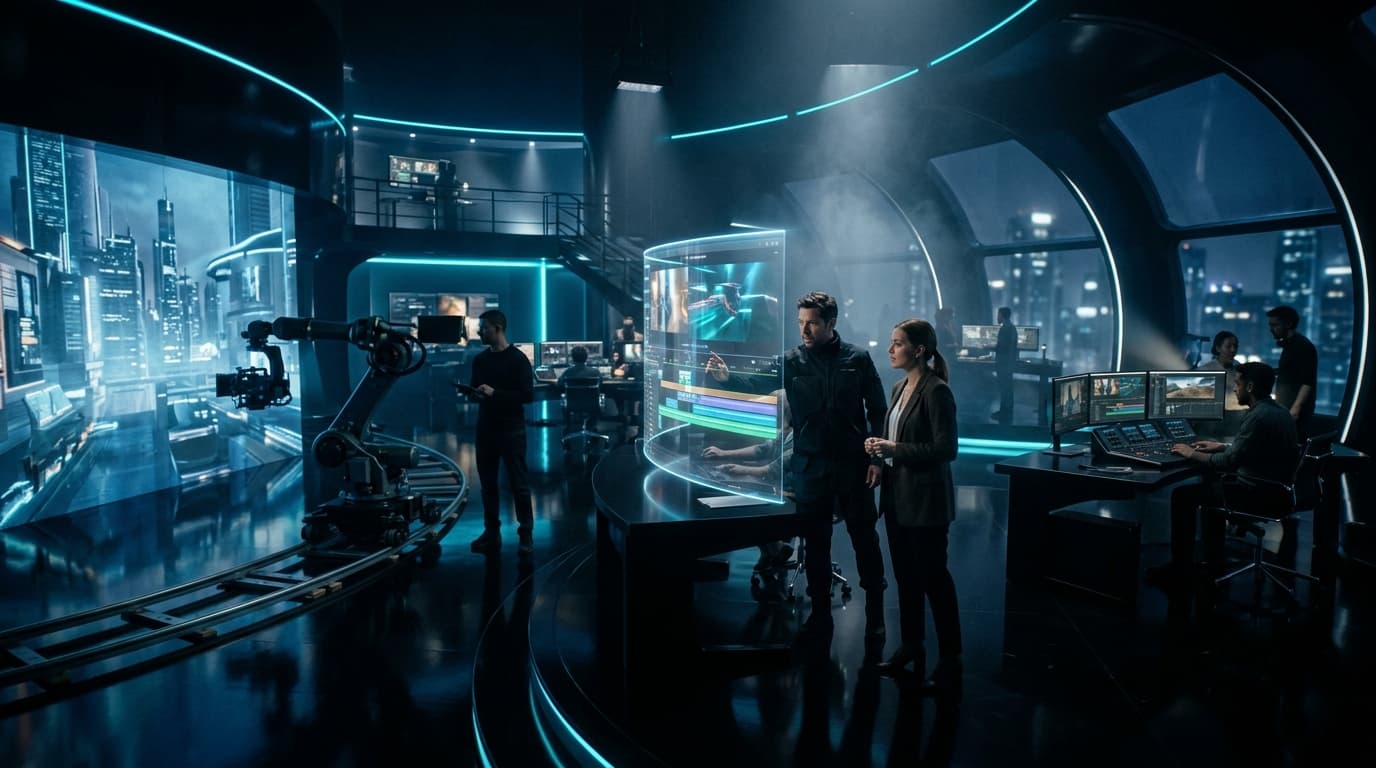
Artificial Intelligence is still in its early stages. Over the coming years, AI Cinematic Production will continue evolving far beyond today's capabilities.
Future production environments will increasingly integrate real-time cinematic generation, AI-assisted virtual production, intelligent camera systems, dynamic scene generation, personalized commercial creation, interactive advertising experiences, AI-powered localization, advanced digital actors, and real-time creative collaboration.
Brands will shift from producing isolated campaigns to maintaining always-on creative ecosystems capable of generating premium advertising continuously.
The role of production agencies will also evolve. Rather than functioning solely as video creators, they will become creative technology partners helping businesses combine strategy, storytelling, AI, and data into scalable marketing systems.
At Neural Noir, we believe this future is already beginning. The companies investing in cinematic AI production today are positioning themselves ahead of competitors who continue relying exclusively on traditional production methods.
The future of advertising will not belong to those with the largest production budgets. It will belong to those capable of combining creativity, technology, and storytelling into unforgettable brand experiences.
Conclusion
Commercial filmmaking has entered a new era. Artificial Intelligence has expanded the creative possibilities available to brands of every size, making premium visual storytelling more accessible than ever before.
However, creating exceptional advertising has never been about technology alone. It has always depended on understanding people. Great commercials inspire, educate, entertain, and build trust.
Professional AI Cinematic Production Agencies combine the efficiency of Artificial Intelligence with the timeless principles of filmmaking, strategic thinking, and emotional storytelling. The result is advertising that captures attention while creating lasting connections between brands and audiences.
As marketing continues evolving, businesses that embrace cinematic AI production will gain a significant competitive advantage through faster production, stronger storytelling, and more scalable creative systems.
Artificial Intelligence is changing how commercials are made. Human creativity continues to define why they matter.
Frequently Asked Questions
Ready to Create Hollywood-Quality AI Commercials?
At Neural Noir, we help ambitious brands transform ideas into cinematic AI commercials, premium product films, and visually compelling advertising campaigns that capture attention and drive measurable business growth.
Whether you're launching a new product, scaling performance marketing, or redefining your brand identity, our AI-powered cinematic production process combines creative strategy, Hollywood-inspired filmmaking, and advanced AI technology to deliver commercial content built for the future.
Let's create the next generation of cinematic advertising—together.
Ready to Lead the Neural Revolution?
partner with Neural Noir to deploy high-impact cinematic AI advertising for your brand.